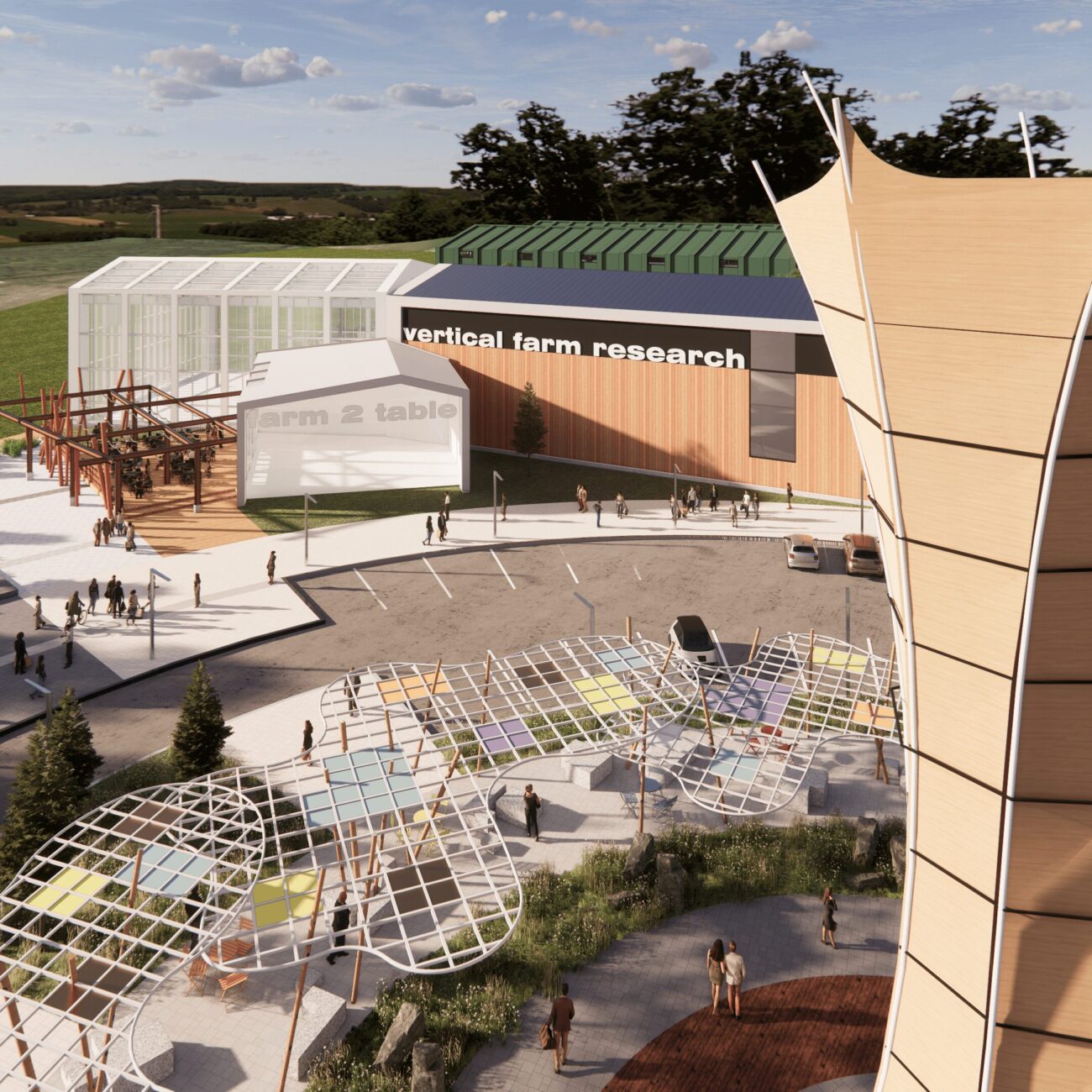
Verta.Farm (CEA) Commercial Scale Controlled Environment Agriculture Facility in Strategic Collaboration with Telus
Enhancing Regional Food Security with Verta Farm CEA
Commercial-Scale Controlled Environment Agriculture Facility in Strategic Collaboration with Telus
Verta.Farm is a pioneering developer of controlled environmental agriculture (CEA) solutions aimed at addressing regional food security challenges. By focusing on building commercial-scale, replicable vertical farms, Verta.Farm seeks to revolutionize sustainable agriculture practices with a low to zero carbon impact. These farms are designed to operate with constant and reliable energy, enabling fixed-priced produce year-round, 24/7. In a country where over 90% of fruits and vegetables are imported, Verta.Farm aims to leverage the infrastructure of AHI Red Deer Sustainable Innovation Campus to drive innovation and provide access to essential resources. The farms will utilize cutting-edge technology and open AI solutions to cater to various types of produce, ensuring optimal growth and efficiency.
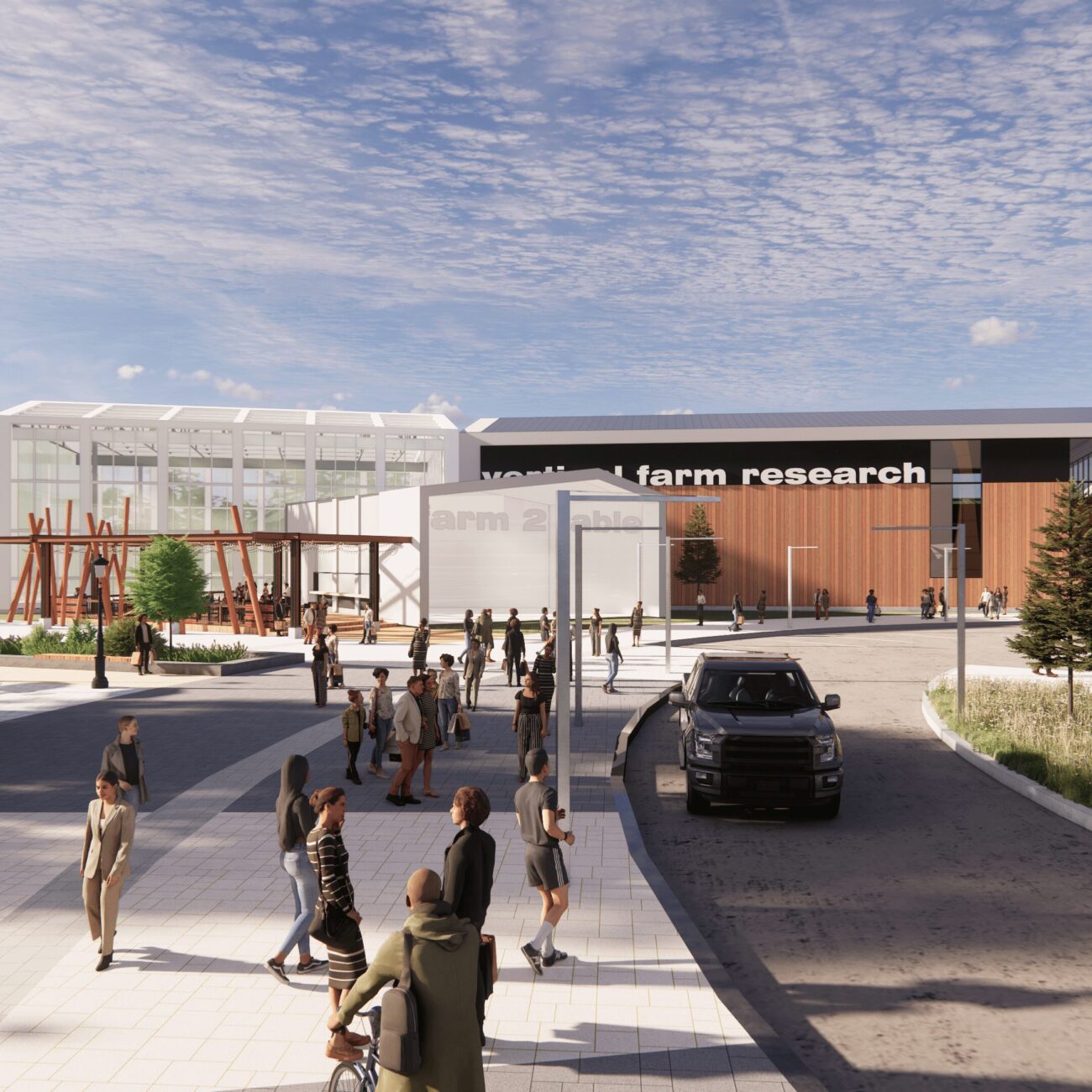
Over the span of 5 years, Verta.Farm has outlined a strategic plan to set up three vertical farms at the AHI Red Deer Sustainable Innovation Campus. The project will commence with a 25,000 sqft building serving as the first farm, followed by the construction of two larger 160,000 sqft farms. This ambitious endeavor positions Verta.Farm as a global leader in controlled environmental agriculture, setting a new standard for sustainable farming practices. By leveraging advanced technology and Telus solutions, Verta.Farm aims to establish fully automated and efficient farms that cater to a wide range of crops while ensuring a high level of production and environmental responsibility.
Verta.Farm's farming operations are deeply rooted in technology and innovation, utilizing a range of cutting-edge tools and equipment to optimize crop growth and production. The farms are equipped with state-of-the-art technology, including open AI systems, IoT sensors, and Telus Agriculture solutions, ensuring seamless monitoring and management of all farm activities. By embracing advanced data and artificial intelligence solutions, Verta.Farm enhances operational efficiency, improves traceability, and delivers exceptional outcomes for both producers and consumers. This strategic collaboration with Telus Agriculture underscores Verta.Farm's commitment to driving growth and sustainability within the food and consumer goods value chain, while providing access to healthier, more sustainable food options for consumers.
Telus Innovation and Technology Addressing Regional Food Security
Telus and Havenz are leading Verta.Farm in creating a unified, trustworthy, and sustainable value chain. The primary goal is to address inefficiencies in the food and consumer goods production, distribution, and consumption processes. Through actionable digital solutions and data insights, we aim to streamline the global supply chain, promote more efficient production methods, enhance safety, quality, and sustainability standards, and provide transparency to end consumers. Telus will empower the farm with cutting-edge technology, including smart building systems, IoT sensors, data trackers, environmental controls, food safety protocols, production management tools, collaboration platforms, sales and marketing optimization, connected logistics, supply chain management, and traceability and sustainability solutions. This strategic partnership ensures that Verta.Farm operates at the forefront of innovation, driving positive impact and change throughout the agricultural industry.
Global Collaboration Opportunities with Verta.Farm
The Verta.Farm’s controlled environment agriculture (CEA) facilities are open for collaboration, inviting global experts, operators and technology companies to join forces in developing smart, data-driven farms that tackle regional food security challenges. This presents a unique opportunity for food innovators, lighting companies, technology experts, scientists, and other industry leaders to contribute to sustainable agricultural practices. Each region requires a tailored evaluation, and for Canada and the USA, the availability of labor and access to reliable energy are crucial factors. At the AHI Red Deer Sustainable Innovation Campus, access to on-site infrastructure such as constant and reliable high loads of power, heat, water, and food-grade CO2 is essential. The operational demand for approximately 18MW of power every day, year-round across the three farms necessitates a robust energy solution, making the collaboration with global experts and technology companies imperative to achieve success in addressing food security challenges.