Energy, data, food and job security: AHI names its four pillars
The campus is designed to answer four questions Alberta and Canada are asking at once.
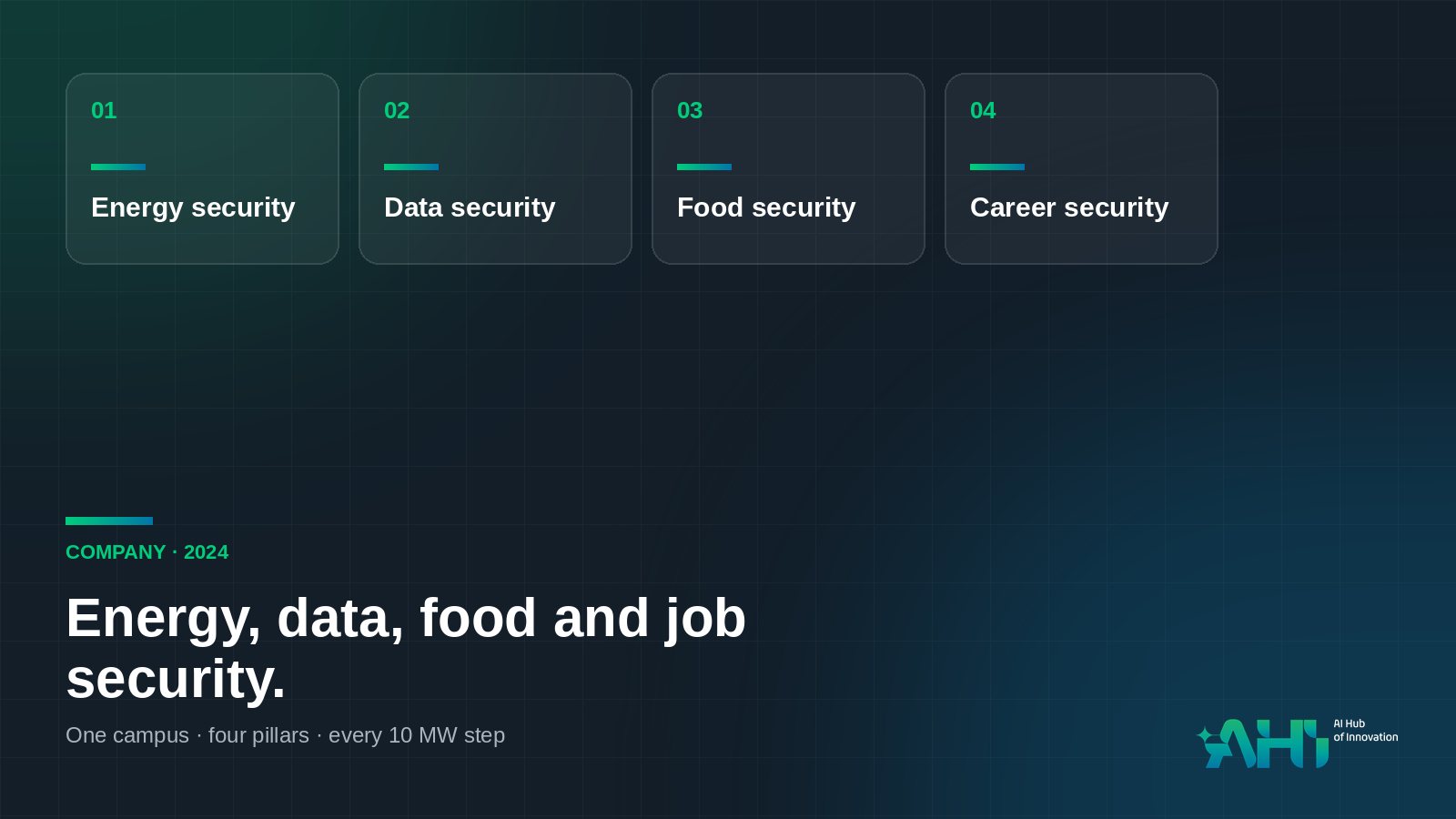 The four pillars
AHI has set out the four pillars that define what the campus is for — and how every design decision will be measured.
Energy security. Dispatchable, behind-the-fence generation on site, with a grid-export pathway in development so the campus adds capacity to Alberta’s system over time.
Data security. Canadian-owned, Indigenous-aligned infrastructure where workloads stay on Canadian soil, under Canadian law — sovereign by design.
Regional food security. Waste heat from the halls engineered to catalyze year-round agritech on the campus — turning a by-product into a regional asset.
Career security. Alberta trades today, and an operations team that grows with every 10 MW hall over a 25-year horizon — with education partnerships so local students can step straight into these careers.
“A data centre on its own is a building,” said Sunny Sarpal, CEO & Founder. “Energy, data, food and jobs together are a community asset. That is the standard we are building to.”
AHI — AI Hub of Innovation is developed by Havenz Smart Communities (Lead Developer) in partnership with Turning Stone Developments (Lead Investor); both are general partners of AHI. Figures are as published on ahicampus.com at the date shown; nothing in this article constitutes an offer to sell or a solicitation to buy securities. Growth beyond the 30 MW plan of record is a pathway subject to its own permits and studies.
More from the newsroom
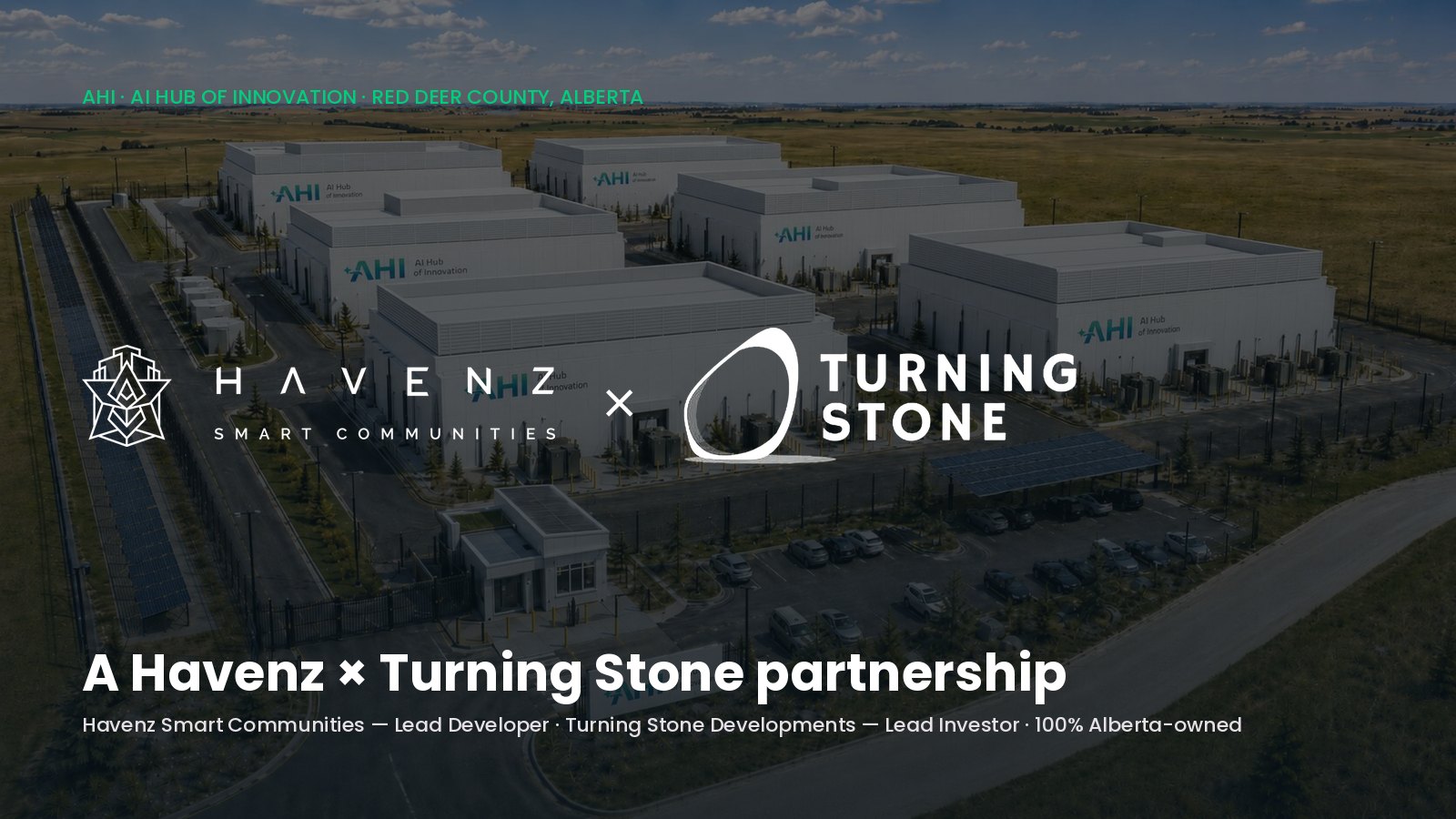
AHI × Turning Stone: Indigenous-owned partnership at the forefront of Alberta’s AI campus
Havenz Smart Communities, Lead Developer, and Turning Stone Developments, the Métis-led, Indigenous-owned Lead Investor — one flagship, one standard.
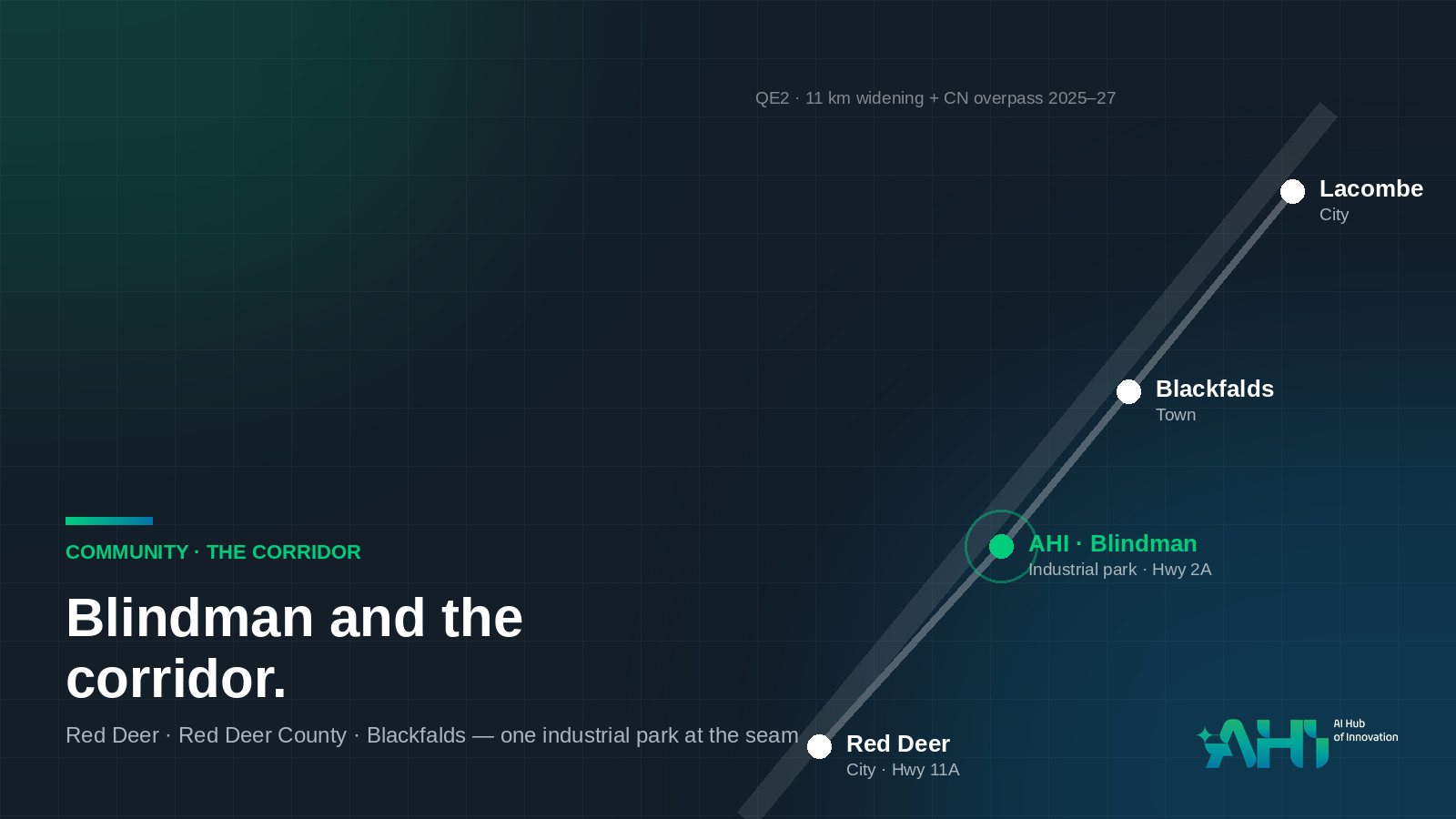
Blindman and the corridor: what an anchor project does for a heavy-industrial park
A County industrial park at the seam of Red Deer, Red Deer County and Blackfalds — on a transportation corridor that is getting bigger.
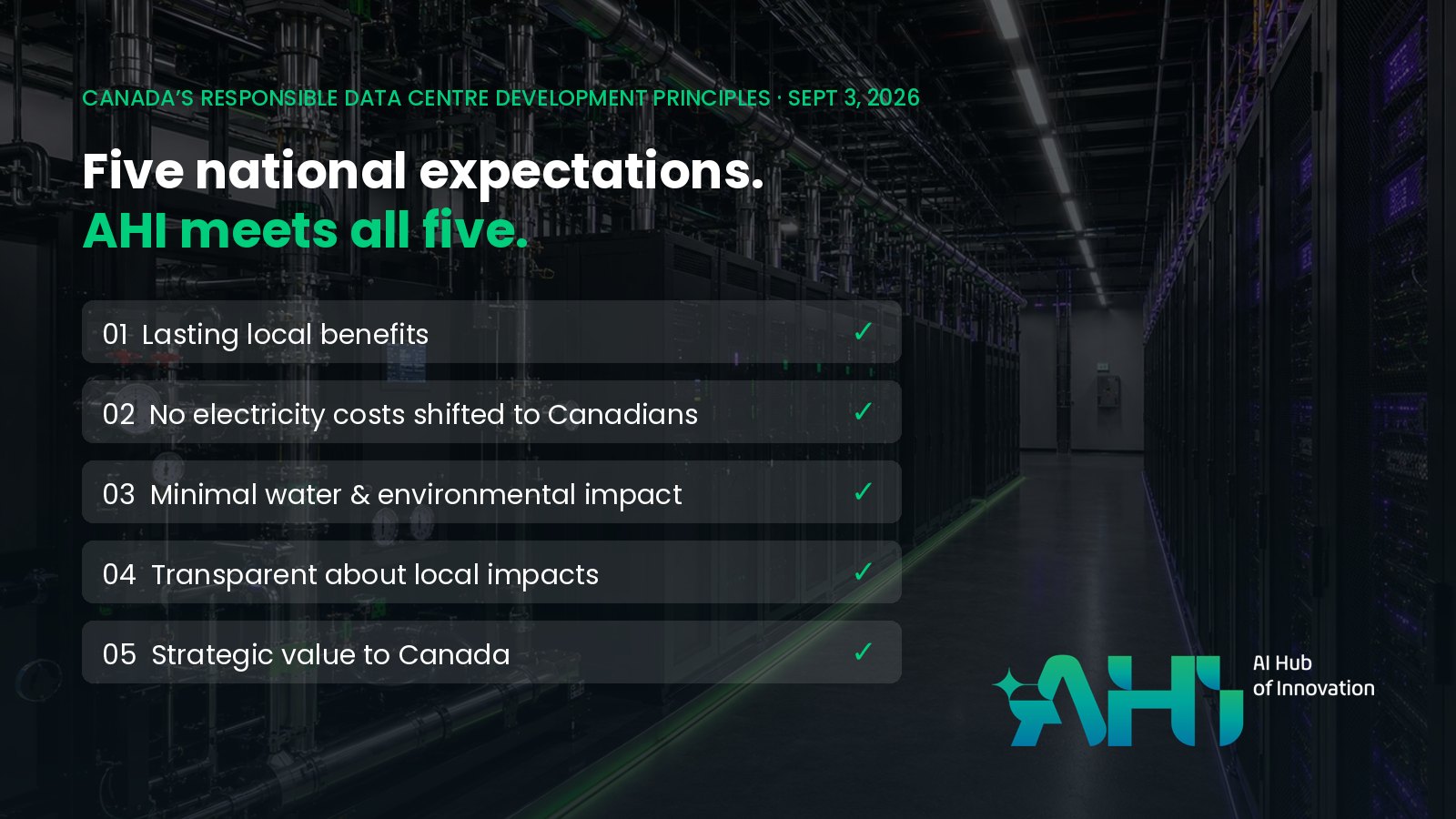
Canada launches Responsible Data Centre Development Principles — AHI publishes its line-by-line alignment
Lasting local benefits · no electricity costs shifted · minimal water · transparency · strategic value to Canada — five national expectations, five answers on the record.